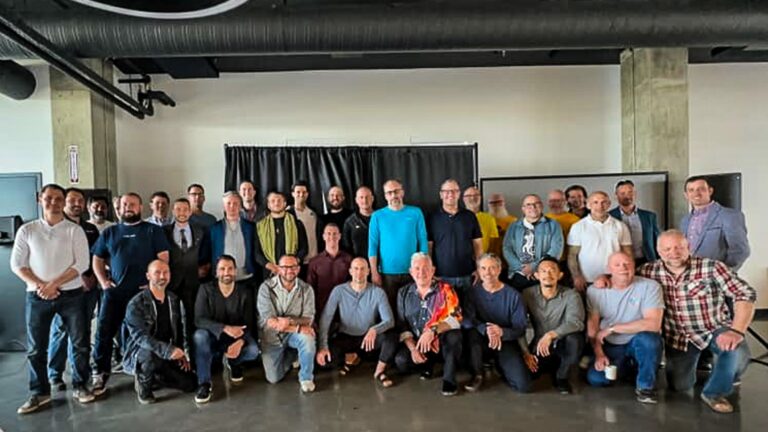
The $8.8 Trillion Tax: A CEO’s Guide to the Global Emotional Recession
“The mortality impact of being socially disconnected is similar to that caused by smoking up to 15 cigarettes a day, and even greater than that associated with obesity and physical inactivity.” — Our Epidemic of Loneliness and Isolation (2023)
I tire of sensationalized headlines, and I suspect most of us do. The point of this article is to highlight the impact of disconnection in our society. Emotional disconnection is the most underestimated threat facing humanity today. Connection is not a ‘nice-to-have’ it is a ‘must-have.’ That holds true for personal growth, professional growth, or even organizational performance.
It’s important to note that the researcher referenced above, Dr. Julianne Holt-Lunstad, is not just talking about “feeling lonely.” The research looked at social integration, how many social connections individuals have, and the quality of those relationships.
Connection is more than simple proximity. You can have thousands around you, but still be utterly alone. As a guy who has made physical fitness a priority in the second half of his life, I like to think of connection on a continuum. Just like physical fitness, connection requires intentionality; it requires maintenance, and you can always deepen your connection. You can always move up the connection continuum.
The Connection Continuum
Where are you currently arriving on this continuum? Be honest, your ‘Internal Mask’ usually wants to slide it further to the right than your reality suggests.
Functional Connection vs. Emotional Connection
Have you ever been to one of your kids’ events only to find that your mind has wandered off to a problem back at work or a project you are working on? You are physically present at the event, yet somehow you are not emotionally present.
As a man, I take a lot of pride in being a “good dad.” I would say that I have done a reasonably good job of doing that. When my kids were younger, despite a busy work schedule as CEO of a large brokerage firm, I attended almost every soccer game, dance recital, or basketball game. I coached soccer for many years and really enjoyed being a part of my kids’ development.
The problem I often ran into when I was just there to watch was that I would hear that final whistle or the applause of the audience which would snap me back to right here, right now only to realize that I had no idea what had actually taken place in the game or the recital. I had a tremendous amount of pressure at work, and more often than not my mind would be back at the office while my body was physically at the kids’ event.
I stayed functionally connected (proximity) to my kids, but I lacked an emotional connection (presence) with them.
I still wrestle with the aftermath of this disconnection some 15+ years later. The internal struggle that would follow is something I am only recognizing now. I would feel internally embarrassed and ashamed, even though no one else would have known that my mind was elsewhere. I would ruminate and let that inner critic do a number on me. What ended up often happening was that when I was physically at the soccer field, my mind would be at the office and when I was physically at the office, my mind would be back thinking about all the ways I should do a better job of showing up for my family.
The result? I was never really anywhere. This fragmentation of self eventually cost me my marriage.
In the end, that ended up being a good thing and forced me to show up with presence for my kids in a much more powerful way. That is another article all on its own, which you can read here.
Mind here.
Mind away.
A Framework for Closing the Gap
Connection is a skill that needs to be learned and relearned. For many of us men in my generation it is a skill that we had actively knocked out of us. I think bell hooks said it best.
“The first act of violence that patriarchy demands of males is not violence toward women. Instead, patriarchy demands of all males that they engage in acts of psychic self-mutilation, that they kill off the emotional parts of themselves. If an individual is not successful in emotionally crippling himself, he can count on patriarchal men to enact rituals of power that will assault his self-esteem.” ~bell hooks
Over the past ten years, I’ve dedicated an excessive amount of time to considering the most effective ways to cultivate these abilities. I have facilitated hundreds of men’s groups, and this is part of what I have learned. There is a scaffolding for deeper connection based on three pillars.
- Connection to self (Foundation)
- Connection to others
- Connection to Community
It all starts with our connection to self. For most of us, that is absolutely terrifying, whether we recognize it or not. It takes a great deal of courage to get intimate with oneself. In men’s work, we often talk about the masks we wear externally. The way we show up and present ourselves to the world. Most people can easily identify with this concept and accept it.
The more insidious piece is the masks we wear internally. The way we try to delude ourselves from seeing what is really going on inside. To maintain our performance, we hide things not just from others, but also from ourselves. We rationalize difficult emotions and the accompanying behaviours. We do this because we know it is going to be incredibly uncomfortable to actually have to confront those pieces of ourselves.
The resulting avoidance means that we are being run by an operating system that we are not even fully aware of. My personal experience isn’t an outlier; it’s reflected in a global trend of what researchers are now calling an ‘Emotional Recession.’
The Multi-Dimensional Cost of Disconnection
This is obviously a dire personal health issue worth pursuing from that angle alone, but the state of social disconnection also affects our lives in many other ways. Each of these warrants its own article, but I want to get you thinking about the massive cost of disconnection and the far-reaching implications of this issue.
The Biological Cost: A Threat to Survival
The Mortality Rate: The impact of being socially disconnected is similar to smoking up to 15 cigarettes a day, and greater than obesity or physical inactivity (Holt-Lunstad, 2023).
The “Safety Net” Value: Research shows that people with strong personal connections have lower healthcare costs because they have “informal insurance”—friends or family who provide care and prevent expensive emergency room visits.
The Chronic Strain: Loneliness and isolation are linked to an 871,000-death annual toll globally, as disconnection keeps the body in a state of permanent physiological stress.
The Relational Cost: The Erosion of Social Capital
I see this daily in my work with our Connect’d Men community. The relationship cost of isolation, disconnection, and self-reliance is massive. 90% of the men who come to get support from our Connect’d Community come because of either a relationship breakdown or the imminent threat of a relationship breakdown with an intimate partner.
Disconnection isn’t just about losing a partner; it’s about the erosion of “Social Capital” the resources we get from our networks.
- Emotional Support Gap: A 2025 APA poll found that 69% of adults reported needing more emotional support than they received.
- Productivity Spillover: Personal disconnection doesn’t stay at home. “Lonely” individuals are twice as likely to experience depression, which leads to increased absenteeism and a higher likelihood of unemployment.
The Organizational Cost: The $8.8 Trillion “Tax”
According to Gallup’s State of the Global Workplace 2025 and recent academic findings, the global workforce is experiencing a period of stagnation and emotional strain. While organizational performance remains a priority for leaders, employee engagement and well-being have struggled to regain pre-pandemic momentum, leading to a phenomenon researchers call an “Emotional Recession” (Freedman et al., 2024).
Gallup State of the Workforce 2025: Key Statistics
The latest Gallup data reveals that engagement levels remain low despite years of corporate focus on the issue (Gallup Inc., 2025).
- Global Engagement: Only 21% of employees worldwide are actively engaged at work (Fonseca, 2025; Gallup Inc., 2025).
- U.S. Workforce: In January 2025, Gallup reported that 31% of U.S. employees are engaged, while 17% are actively disengaged (Harter, 2025).
- Remote & Hybrid Trends: Disconnection is visible in hybrid models, with engagement scores among remote and hybrid workers dropping to 47% (Gallup, 2025).
- Economic Impact: Global disengagement is estimated to cost the world economy approximately $8.8 trillion annually, which is roughly 9% of the global GDP (Gallup Inc., 2023).
The “Emotional Recession” & Disconnection
Recent research describes a sustained decline in the emotional and relational capacities required for a healthy workplace culture (Freedman et al., 2024).
Declining Emotional Intelligence (EQ)
A longitudinal study of 28,000 adults across 166 countries found that global EQ scores declined by 5.79% between 2019 and 2024 (Freedman et al., 2024). The largest drops occurred in:
- Intrinsic Motivation: The internal “drive” to perform.
- Exercise Optimism: The ability to maintain a positive outlook during stress.
- Social Connection: The quality of relationships, which is a top predictor of both longevity and workplace thriving (Freedman et al., 2024).
Quiet Quitting and Psychological Withdrawal
Disconnection often manifests as “Quiet Quitting,” where employees fulfill their formal duties but withdraw emotionally and psychologically (Saraiva & Nogueiro, 2025).
- Causes: Research links this to a breach of the “Psychological Contract” the unwritten expectations between an employee and employer (Pasha & Soetjipto, 2026).
- Generational Shifts: Younger workers (Gen Y and Z) are more likely to disconnect if they perceive a lack of autonomy, workplace justice, or alignment with the organization’s values (Saraiva & Nogueiro, 2025).
In leadership we spend our careers optimizing systems, refining “operating models,” and chasing a 1% increase in efficiency. Yet, we allow the most fundamental system of all, our biological and emotional connection to ourselves and others, to run on a corrupted, outdated OS. If disconnection is the $8.8 trillion tax on our global economy, then emotional connection (presence) is the ultimate competitive advantage. It’s time we stop treating connection as a ‘soft skill’ and start treating it as the foundational requirement for a life actually lived. Because at the end of the day, there is no ROI on a life where you were physically present, but never really there.
The Connection Lab
I’m a big fan of experimentation. I recognize that my way may not be the right way for everyone, yet I also know that everyone has a right way for them. I built the Connection Lab to offer a variety of experiments to practice to enhance connection. Today I will leave you with an experiment to try.
Experiment: The Two-Word Check-In
Concept: Creating the space to name where you/others are emotionally before trying to go somewhere else. This is not about fixing anything. It is simply an opportunity to pause, observe and name what is alive in you and those around you right this moment. In a leadership context, this becomes easy when you build some common language with those you meet with regularly. My team learned that this is how we start every meeting, and all I had to say was “Let’s check-in.”
The Practice: In your next meeting (or even conversation) create the space for a simple check-in. “In two feeling words, how are you arriving today?” Ideally, answer it yourself first.
The Payoff: You stop performing connection and start practising it. This saves time by helping to identify and reduce emotional noise before the business starts.
“To be socially connected is not only a psychological comfort; it is a biological imperative for survival.” — Dr. Julianne Holt-Lunstad